I’m running for District 10 Supervisor to ensure that the southeast side of San Francisco gets the same focus, urgency, and investment as the rest of San Francisco. As Supervisor. I will fight to build affordable, stable housing for working families while protecting long-term residents from being displaced. I will push for a full environmental cleanup at the Hunters Point Shipyard, fight for cleaner air and less pollution. I’ll bring more shelters, supportive and drug-free housing, and job training programs that support real recovery and get people off the streets. And I’ll push for more police officers, more violence-prevention programs, and more jobs and opportunities for our people. In my first 30-days, I will call to jump-start the planning process for a Community Economic Development Plan; align city agencies for a more responsive government; and tackle affordability with the urgency it deserves.
Building Affordable Housing for Working Families While Protecting Long-term Residents from Displacement

My grandfather bought a house at Third and Palou on a laborer’s wages. If he were alive today, he couldn’t afford to live in San Francisco. That must change. My career has been focused on creating a more affordable, liveable San Francisco–creating 1,000 new affordable homes as City Commissioner, bringing 3,000 good jobs to San Francisco with the Warriors, and doubling Salvation Army’s homelessness services. As Supervisor, I will be laser-focused on building a San Francisco where families can afford to live and thrive for generations to come.
-
Get shovels in the ground on the 20,000 housing unit pipeline at Pier 70, the Power Station, India Basin, the Shipyard, Candlestick, and Schlage Lock. Approvals mean nothing until they become homes.
-
Build without displacement. Expand Certificate of Preference programs and make down payment assistance a priority. Local hiring, workforce development, and community benefits get negotiated upfront, not used as excuses to block projects. We will also focus on preserving the elements of the Dignity Fund to protect our growing senior population.
-
Protect the people here now. I will defend rent control. I have never worked to weaken it and never will. I will work to expand Small Sites acquisition so buildings stay off the speculative market for working families, and fund the legal help that keeps people housed. Replacement housing and right-of-return commitments are effective when we pair new housing with intentional community protection measures so longtime residents share in the city’s growth.
-
Make sure every neighborhood does its part. District 10 absorbed most of this city’s growth while other neighborhoods stayed walled off by exclusionary zoning. That is why I supported the Family Zoning Plan, and why I will hold every district to San Francisco’s commitment to make way for the 82,000 homes planned by 2031. I will not block housing. My instinct will always be to find a way to yes.
-
Make projects pencil. Let’s streamline permitting, put a shot clock on approvals, and pull every cost lever, from fees to financing tools like infrastructure financing districts, the Housing Accelerator Fund, and modular construction. Anchor institutions work: UCSF anchored the Power Station for example.
-
Legalize the homes that pencil. That means six-story apartments on infill lots near transit, single-stair buildings that fit our smaller lots, and density minimums on our corridors, because it makes no sense to build two units where twenty belong.
-
Build neighborhood-scale on our corridors, with height where it fits. The first place to build is along our main transit corridors, Third Street, 16th Street, and Bayshore Ave.
-
Rebuild the ladder to homeownership. That means more below-market homeownership and down-payment assistance, workforce and middle-income homes on underused public land, and an expanded Certificate of Preference with down-payment grants attached, so families who have lived here for generations can own here again.
-
Rebuild public housing into mixed-income communities without displacing residents, and honor and expand the right of return.
-
Hold developers to their agreements. If construction doesn’t start within a reasonable time, revisit the various development agreements and find a builder who will build. Community benefits and stabilization are part of the deal, not extras, especially on public housing sites.
-
Make sure quality is non-negotiable. Brand-new affordable and public housing should not be falling apart within a few years, as residents report at Alice Griffith, Pacific Pointe, and other public housing sites. The city needs aggressive, unified oversight of public housing conditions.
-
Expand new initiatives. To grow affordable housing funding to $125 million a year and bring in private capital to the Housing Accelerator Fund to remove financing roadblocks holding back projects. Also re-explore modular construction, built here in SF by local residents.
A Comprehensive Approach to Homelessness

When someone is ready to change their life, services should be readily available. At the Salvation Army, I doubled the organization’s homeless services, built The Way Out continuum of care system, and opened a 50-bed mental health respite center, with three sober living and transitional housing sites now open citywide. As Supervisor, I’ll fight for more shelters and supportive and drug-free housing, and job training programs that support real recovery.
-
Build the missing capacity in every district. Expand mental health and substance use treatment beds, sober living, and transitional and supportive housing with wraparound services, using every Prop 1 dollar we can win.
-
Build the continuum of care. We need crisis intervention, substance use treatment, and sober living programs that support real, long-term recovery. We must never release someone from treatment back onto the street without a stable next step.
-
Fix the funding rules so public dollars can flow to sober living and drug-free recovery housing. I’ve fought for that approach since City Hall first laughed at the idea. Now it’s working. And we need to double down.
-
Ensure fair distribution. District 10 has too often been treated as the city’s dumping ground for homelessness, and yet we lack the resources to help people get off the streets in District 10. That is why I support the One City Shelter Act. Services belong in every district, delivered with urgency and compassion at the same time.
-
Fight for a targeted income safety net for the people most at risk of falling into homelessness: seniors and people with permanent disabilities.
-
Strengthen civil legal aid, which can stop illegal evictions and unlawful debt collection and protect survivors of domestic violence before a crisis pushes a family onto the street. So many families are a paycheck or two away from destitution.
-
Protect and grow City funding for civil legal services, and support the providers doing this work in the district, including Open Door Legal in Bayview. The City has proven it can stand up protection programs fast when it must, as it did during COVID and the ICE raids. We must make that capacity ongoing, not emergency-only.
-
Expand crisis-response alternatives, such as the Crisis Response Team and CART, so that, when applicable, the right responder meets the right call.
-
Staff the system. That means competitive compensation to address behavioral health and nursing shortages, training San Franciscans into healthcare careers instead of importing travel staff, and ensuring public behavioral health services are not privatized.
Safe Streets for All

Every neighborhood has the right to feel safe, and safety has to make sense for each unique neighborhood. That means a fully staffed police department with good beat cops back on our corridors, in every neighborhood, violence prevention programs for the young people most at risk, more jobs and opportunities for our youth, and police accountability that builds trust. Public safety is about wellbeing, not just a law enforcement response.
-
Deliver a fully staffed police department with consistent foot and bike patrols on our corridors: Third Street, 22nd Street in Dogpatch, 18th/20th Street in Potrero, and Leland Avenue in Visitacion Valley. Beat officers have finally returned to Third Street after six years of asking. Let’s keep them.
-
Fill the roughly 500-officer shortage. Prioritize lateral signing bonuses, faster background checks, a bigger cadet class, and the public safety track in my School-to-Career plan. Civilianize desk work and let ambassadors take the calls that don’t need a badge.
-
Ensure faster response times and a coordinated response to organized retail crime.
-
Resource Bayview Station properly. It is chronically understaffed, so my budget advocacy will shift real resources there and finish the corridor camera networks planned for Third Street and Leland Avenue.
-
Prioritize prevention alongside enforcement. Focus on violence prevention and interruption for the young people most at risk, well-lit streets, traffic calming on Third Street, more quality parks, stronger after-school programs, and more active storefronts.
-
Connect people to jobs and services through neighborhood nonprofits and violence intervention teams.
-
Ensure consistent parking enforcement so businesses can breathe. No police-escorted ticketing sweeps!
-
Revive the interagency accountability table for problem properties and liquor stores. Bring code enforcement, the City Attorney, SFPD, and the supervisor’s office together at one table, on a schedule. It worked here before.
-
Prioritize police accountability that builds trust, with meaningful civilian oversight.
Combatting Illegal Dumping
Clean streets are a basic city service, not a luxury. Yet too many District 10 neighborhoods experience persistent illegal dumping, overflowing trash, and chronic hotspots that return almost as quickly as they are cleaned. We need to make it easier to dispose of waste properly, hold illegal dumpers accountable, and demand better coordination and faster service from City agencies and Recology. Every neighborhood deserves the same standard of cleanliness and care and no neighborhood should be treated like a dumping ground.
-
Make disposal easier. Expand free bulky-item pickups, community dumping days, and education about available disposal services.
-
Strengthen enforcement. Enforce mandatory trash service, pursue repeat offenders, collect owed fines, and use cameras and technology safely to identify chronic dumpers while protecting privacy.
-
Expand cleanup services. Call on Recology to expand services and increase Public Works capacity in neighborhoods, commercial corridors, and illegal dumping hotspots.
-
Fix the gaps. Develop specific cleanup and maintenance strategies for unaccepted streets, industrial areas, mixed-use corridors, and large housing developments that too often fall between agencies.
-
Create jobs while cleaning our neighborhoods. Expand workforce and job-training partnerships that put residents to work cleaning, maintaining, and beautifying their communities.
-
Demand measurable results. Set neighborhood-level response standards, publicly track cleanup times and enforcement outcomes, and target resources where the data shows they are needed most.
Better Transit Options to Better Connect District 10

Our transit goals should connect our neighborhoods, not cut us off from the rest of the city. Reliable, affordable transit connects us all.
-
Make the T Third the reliable artery it was promised to be. Fix the switchbacks, win signal priority, and deliver safer, better-maintained stops connecting Potrero Hill, Dogpatch, Bayview, Hunters Point, Visitacion Valley, and Sunnydale. Protect and expand the 15 Bayview Hunters Point Express, the bus line this community fought to win back.
-
Think regionally. Bring Caltrain all the way downtown instead of having it stop at Fourth and King, make Bayshore Station a real front door for Visitacion Valley and Sunnydale, and deliver ferry service from this side of town: Mission Bay, Dogpatch, the Shipyard, and Schlage Lock.
-
Keep the neighborhood connected through the Islais Creek Bridge replacement. The Illinois Street detour is inadequate for a crossing that carries industrial traffic, the wastewater plant, and fire response. We need to go back to the drawing board with the Bridging Bayview coalition, pursue unspent bond dollars so a crossing stays open before the old bridge comes down, and support corridor businesses through construction.
-
Deliver the Blue Greenway along the waterfront and a low-stress Bayview Community Pathway parallel to Third Street, so a kid on a bike has a safe way through this district.
-
Improve traffic flow on Third Street so trucks, bikes, transit, and pedestrians each have a place, with real loading zones so one stopped delivery truck doesn’t back up traffic for blocks.
Building School-to-Career Pathways: Nurturing San Francisco’s Next Workforce Here at Home

San Francisco and the Bay Area are facing workforce shortages in some of our most important industries, including technology and AI, construction trades, healthcare, police and fire, early childhood education, life sciences, and biotechnology. At the same time, thousands of young San Franciscans are graduating without a clear pathway into the careers being created around them. We should stop looking outside our communities to fill every workforce gap and start making a serious investment in homegrown talent. The long-term answer is growing our own workforce. We should give San Francisco students a direct pathway from high school into the careers that will build, care for, protect, educate, and power the future of our city. I will launch a High School-to-Career Pathway Program that connects high school students directly to apprenticeships, training, credentials, and careers in high-demand industries across San Francisco and the Bay Area.
-
Build a citywide education and workforce partnership. Bring together SFUSD, City College of San Francisco, UCSF, the University of San Francisco, the Building and Construction Trades, major employers, labor unions, and City departments to create a coordinated pipeline from high school into education, apprenticeships, and employment.
-
Target high-demand careers. Build pathways specifically around industries facing workforce shortages, including technology and AI, construction and the trades, healthcare, police and fire, early childhood education, life sciences, and biotechnology.
-
Apprenticeships before graduation. Create and expand paid apprenticeship opportunities that allow high school students to gain real work experience while completing their education.
-
Earn while you learn. Students should be compensated for their work and have opportunities to earn industry credentials, certifications, college credit, and apprenticeship hours before graduating.
-
Connect education directly to employment. Work with City College, UCSF, USF, labor, and employers to ensure coursework and training align with actual workforce needs and lead to credentials, apprenticeships, further education, or available jobs.
-
Bring employers to the table. Major employers should help identify workforce needs and provide mentorship, job shadowing, paid apprenticeships, and pathways to permanent employment.
-
Create a regional talent pipeline. Careers do not stop at the San Francisco border. We must partner with employers and training institutions across the Bay Area to dramatically expand opportunities available to San Francisco students.
-
Invest in homegrown talent. When companies expand, major developments break ground, or the City struggles to fill critical positions, our first question should be whether we are creating a pathway for local young people to compete for those jobs.
Investing in Our Community With a Real Community Economic & Development Plan
District 10 is positioned to be one of San Francisco’s greatest engines of growth. Thousands of new homes, major waterfront developments, industrial land, transit investments, and new job centers will reshape our neighborhoods over the next decade. We are a neighborhood with regional connectivity where we can establish a clear competitive advantage. District 10 has the land, waterfront, people, culture, and opportunity. Our challenge is not whether growth is coming. It is whether we lead it and make sure everyone has the opportunity to share in it.
In my first 30 days, I will jumpstart this process. I will also regularly convene residents, businesses, labor, community organizations, developers, and City agencies to begin creating a District 10 Community & Economic Development Plan. Instead of making decisions about housing, transportation, jobs, infrastructure, and community benefits separately, we need one coordinated vision for the Southeast that ensures existing residents share in the prosperity we are creating.
My Community and Economic Development Plan will focus on:
-
Building housing at every level without displacement. Add affordable, workforce, family-sized, and market-rate housing while protecting existing residents from displacement and creating more pathways to homeownership.
-
Revitalizing our commercial corridors. Create neighborhood-focused strategies for Third Street and other corridors that add housing, modernize infrastructure, fill vacant storefronts, and support existing and new locally owned businesses. We will split the corridor into nodes and create targeted strategies and adjust land-use controls where appropriate
-
Aligning City services. The City will spend billions here over the next decade across the PUC, Public Works, Rec and Park, and SFMTA with very little coordination, so three-month projects become three-year projects. My office will set the table, bring department heads into the district, and make responsiveness the standard.
-
Cutting the red tape that costs small business owners months and thousands of dollars before they can open. Expand by-right permissions, shrink permitting timelines, and bring City services directly to our corridors.
-
Creating new job centers with our industrial space. Reimagine underused industrial and PDR areas as centers for life sciences, clean technology, advanced manufacturing, arts, and other industries that create good-paying jobs.
-
Prioritizing transit for both now and for the future. Improve the transit residents depend on today, including a more reliable T-Third, stronger east-west bus connections, safer stops, and better late-night service. At the same time, plan for District 10’s future growth through a long-term multimodal strategy that explores expanded Caltrain access, water transit, biking and walking infrastructure, and stronger connections to downtown, the East Bay, and the South Bay.
-
Guaranteeing community benefits. Major development should produce measurable benefits, including local hiring, workforce training, affordable housing, small business opportunities, parks, infrastructure, and neighborhood-serving amenities.
-
Delivering infrastructure growth requires. Coordinate utilities, streets, schools, childcare, parks, open space, and other public infrastructure with new development rather than waiting until after neighborhoods have grown.
-
Investing in the Black Church. Black churches have anchored Bayview-Hunters Point for generations, providing spiritual leadership, social services, community space, and stability through decades of change. We should help these institutions remain in the community and leverage their land and facilities to create affordable housing, childcare, senior services, workforce programs, and other community-serving uses, while ensuring churches retain ownership and benefit from the value they create.
-
Revitalizing Third Street node by node, because Dogpatch’s needs are different from Bayview’s or Visitacion Valley’s. Pair corridor upgrades with small business support, working with groups like EDoT and the African American Arts and Cultural District, and use tools like the Leland Avenue neighborhood commercial designation so neighborhoods shape their own zoning.
-
Bringing banks and credit unions back to Bayview, and building a corridor worth walking. Downtown’s recovery and our neighborhoods’ rise are one economy, not competing ones.
-
Holding development accountable. Establish clear timelines and public accountability for major entitled projects, particularly Candlestick Point and Hunters Point Shipyard, so promises made to the community translate into housing, parks, jobs, and infrastructure.
Delivering Real Environmental Justice

Fighting for environmental justice has been one of my life’s biggest fights. When a big corporation lied and covered up the existence of toxic soil at the Hunters Point Shipyard, I fought back and organized families into a successful class-action lawsuit against the corporation and won a multi-million-dollar settlement for local families. It was one of the biggest environmental justice cases in American history. As Supervisor, I’ll push for an environmental cleanup at the Shipyard, cleaner air, and less pollution.
-
Stand with the community on the Shipyard. Deliver independent, community-supervised re-testing of the entire site, secure full transparency from the Navy, contractors, and regulators, and mandate no transferring or building on contaminated parcels until they are independently verified as safe.
-
Ensure full accountability on the cleanup, not just settlements. When harm is unequal, urgency must be unequal.
-
Bring care to the neighborhood. A district next door to UCSF and world-class research should not carry the city’s highest rates of asthma, heart disease, and infant mortality. I’ve publicly proposed a UCSF facility in the neighborhood at Third and Williams.
-
Electrification that lowers bills, not raises them. Push for no-cost retrofits for legacy homeowners first and real resilience planning for the shoreline neighborhoods that will feel sea level rise first.
-
Ensure the clean-energy transition is a source of impactful and meaningful local jobs that both keep opportunities in our district with pathways into the essential work of clean-energy careers.
-
Invest in parks, tree canopy, clean air monitoring, and open space from Candlestick Point to India Basin, including interim activation of idle parcels so land waiting for development still serves the neighborhood.
Putting District 10 to Work With the Jobs We Deserve
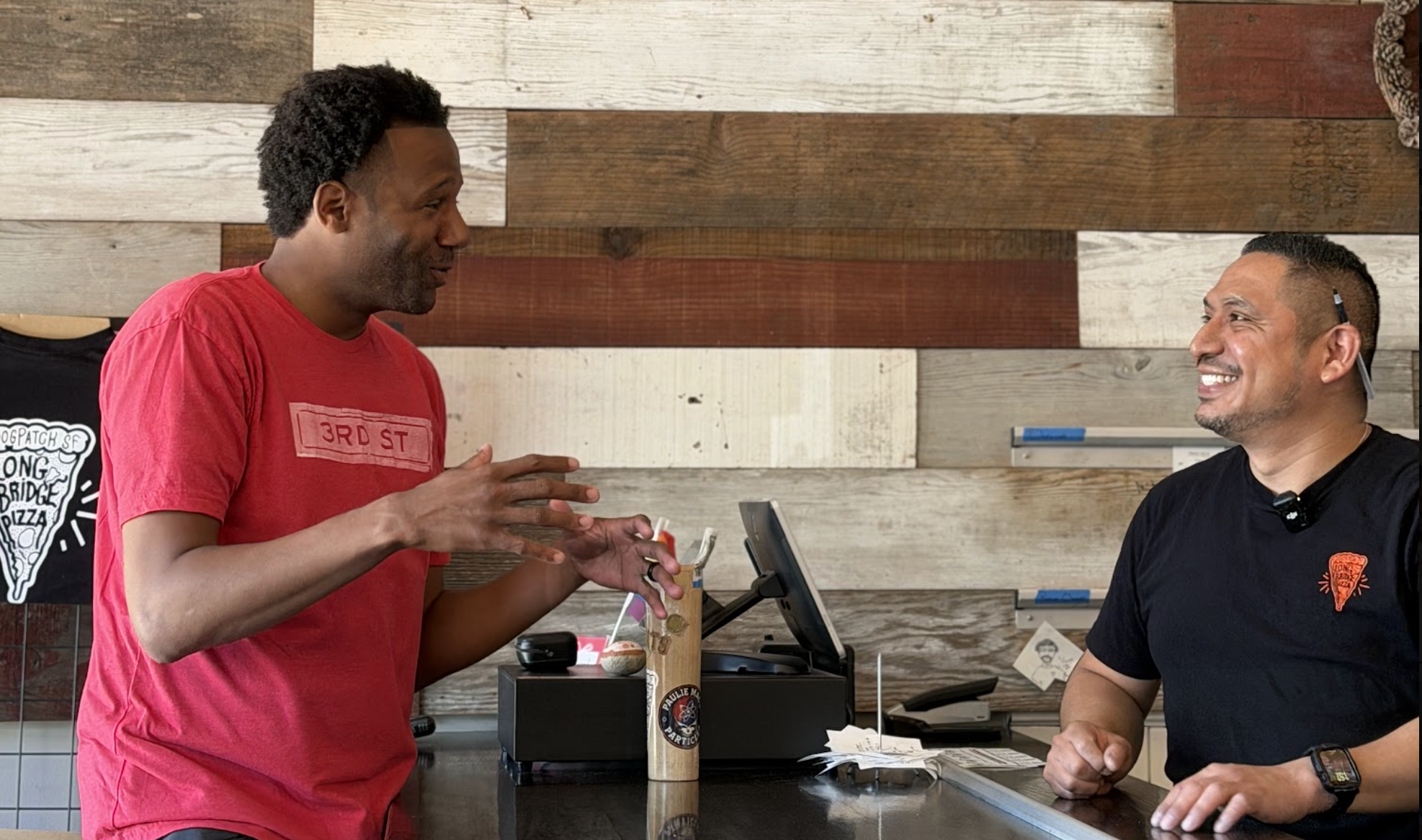
Every major project in District 10 should put our own residents to work first. As the Director of Public Affairs for the Golden State Warriors, I built a coalition of 30,000 residents, neighborhood groups, unions, and businesses that brought The Chase Center and more than 3,000 good-paying jobs to San Francisco, with local hiring built in. As a City Commissioner, I helped restore more than $50 million for workforce development, local hiring, and minority and women-owned business programs. As the Executive Director of the Bayview Opera House, I’ve provided thousands of hours of job training for local workers seeking careers in the arts. As Supervisor, I’ll expand workforce partnerships that train our residents for good-paying jobs, especially in clean energy, construction, and the creative economy.
-
Write local hiring and workforce development into every major project. San Francisco leads across every industry and more of those jobs should support all local communities. We must move away from just buying in San Francisco, but building in San Francisco too.
-
Close the talent gap. San Francisco imports workers in construction, healthcare, and tech and AI while District 10 carries the city’s highest unemployment. We must fill those jobs with our own graduates: union apprenticeships, revived neighborhood training programs, and the training facilities already operating in Bayview that trains crew and places people directly into the union.
-
Support project labor agreements and high labor standards on major projects, and cut the right deal so buildings are union-built and still get built.
-
Preserve industrial space and put it to work. Support contract manufacturing, robotics and AI hardware, and life science companies. A company in Dogpatch should be able to hop on the T and see its assembly line in Bayview.
-
Invest in District 10 entrepreneurs the way Dogpatch cohorts are invested in: cohort-style funding and support for founders from this neighborhood.
-
Streamline pop-up businesses to fill vacant storefronts, like how Vacant to Vibrant has done so citywide, allowing flexible and dual uses of commercial space.
-
Put pressure on absentee commercial landlords to open, making sure we use both a carrot and a stick to activate more short-term leases.
-
Support organized merchant associations, community benefit districts, and advocacy in District 10 so all our commercial corridors can secure resources and stay competitive.
-
Extend the First Year Free Program. Wave fees to make lasting relief beyond the first year, with a tiered system for lower fees in the 2nd and 3rd year of operation for new businesses. Incentivize lasting community ties that build resilience. Extend the first year free program to the new businesses to meet new operators where they are and grow opportunity neighborhoodwide.
-
Bring downtown recovery and development initiatives to our corridors. Incentives to bring new business downtown should not stop at our district border and must recognize the needs of other commercial corridors with shrinking foot traffic.
-
Modernize small business equipment taxation so back-of-house upgrades aren’t painful taxes. Provide relief from year-over-year taxes on equipment so kitchens can upgrade, capacity can grow, and our local businesses afford the same tools larger competitors use to lower prices as business grows.
-
Deliver financing from City Hall to make more creative investments in businesses where it is needed most. Bonds to grow a business should target the corners and spaces most in need.
-
Incorporate census tracts when classifying our local businesses. Low- and moderate-income area businesses must be classified as such to direct additional support and protect the institutions holding the community together.
-
Negotiate directly with pharmacies, grocery stores, clinics, and their parent companies, both locally and from around the world, to bring back anchoring amenities. Public resource business will keep us healthy and grow surrounding long-term opportunities for all.
-
Modernize access to information technologies and AI tools for small businesses so craftsmanship isn’t slowed down by balancing the books or making shifts. Larger businesses don’t need to have a monopoly on cutting edge resources.
Increasing Access to Healthy, Affordable Food

District 10 is a food desert. That must change. As the Salvation Army’s Director of Homelessness Initiatives & Community Development, I led the organization’s citywide COVID response that delivered 500,000 meals to families in need. I understand the importance of expanding access to affordable, healthy food and will make this a top priority in my role as Supervisor.
-
Bring a full-service grocery store and pharmacy to Bayview, using the city-owned Food Co site and its upcoming lease renewal as leverage to negotiate for both.
-
Make the numbers work for operators. That means fee waivers, rent tied to sales, and grocery incentive models so quality stores succeed in neighborhoods the market has skipped.
-
Tie food access into the 20,000-unit waterfront housing buildout and new development agreements. A grocery store pencils when the corridor grows.
-
Partner with the wholesale produce market that feeds the city and the region from right here, and with community food programs.
Standing Up for Our San Francisco Values
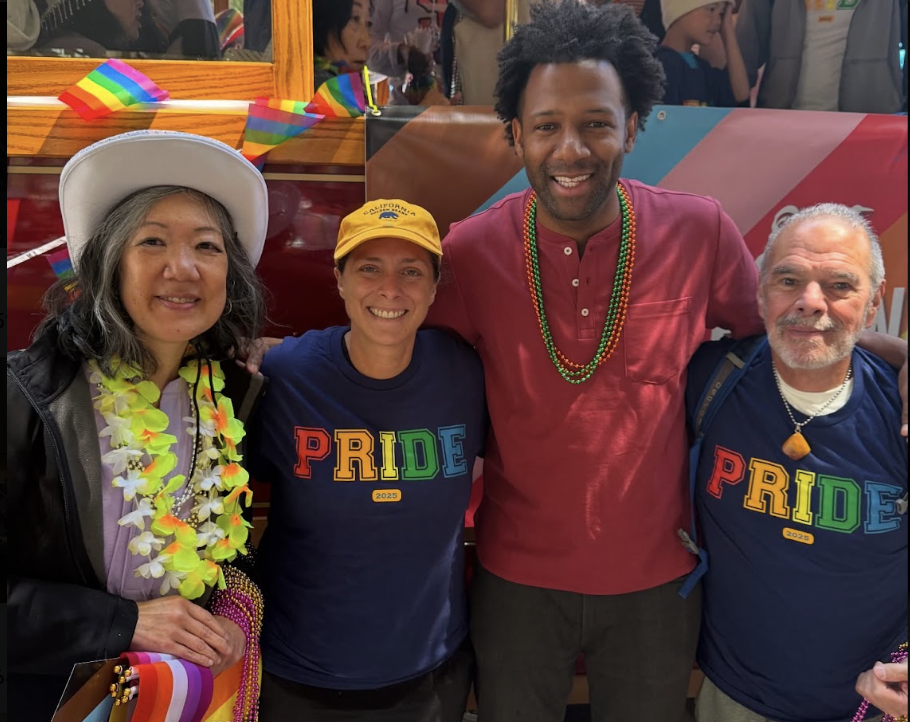
San Francisco has long been the birthplace for new social justice and civil rights movements. We are a proudly diverse and welcoming city. In today’s national climate, we must double down on defending the values that make us proud to be San Franciscans. I’ve spent my career in this fight: at 24, I built the coalition that stopped Stop and Frisk from coming to San Francisco, and on the Human Rights Commission, I defended our sanctuary city and anti-discrimination policies.
-
Our sanctuary City policy is not negotiable. There must be no city cooperation with federal immigration enforcement. We must demand a fully funded Immigrant Legal Defense Fund, and ensure our rapid response networks are ready before the next ICE raid.
-
Keep the places families must go from becoming places they fear. Treat our schools, clinics, and houses of worship as protected community spaces with clear protocols, fund know-your-rights and rapid-response networks in the languages our neighbors speak, and ensure that using a City service never triggers immigration consequences.
-
We must defend reproductive care and gender-affirming care from federal attack, and stand with our LGBTQ+ neighbors, from trans students to the drag stages, bars, and cultural spaces that make San Francisco San Francisco.
-
Confront hate and discrimination in every form. Strengthen the city’s hate crime reporting and response systems, get security resources to the community institutions being targeted, and build cross-community coalitions now, so when hate shows up, we are already organized to respond together.